Bonusly is an HR platform built around employee recognition—helping teams stay engaged, seen, and less likely to quit. When I joined, the paid side was messy. The data was unreliable, reporting was off, and we didn’t have a clear sense of what was actually driving returns.
I managed paid strategy across Google, Bing, LinkedIn, and Facebook—building campaigns, rewriting structure, and implementing better tracking from the ground up. I brought in Databox to clean up reporting and give us a clearer read on ROAS, so we could stop guessing and start spending where it counted.
Outside of ads, I overhauled their nurture flows and landing pages, which hadn’t been performing and didn’t reflect the product’s strengths. I rewrote, rebuilt, and restructured the experience—so leads weren’t just showing up, they were moving.
And because content is always in the mix for me, I also supported the blog and content team—offering strategy input and contributing pieces when I could. It was a short stint, but a focused one—and the work made a difference.
What I Did
Conversion Rate Optimization
Demand Generation
Graphic Design
Email Marketing
Tools I Used In This Position
Canva
Excel
Hubspot
Google Ads
Databox
LinkedIn Ads
Meta Ads
Twitter Ads
Bonusly
How I Did It
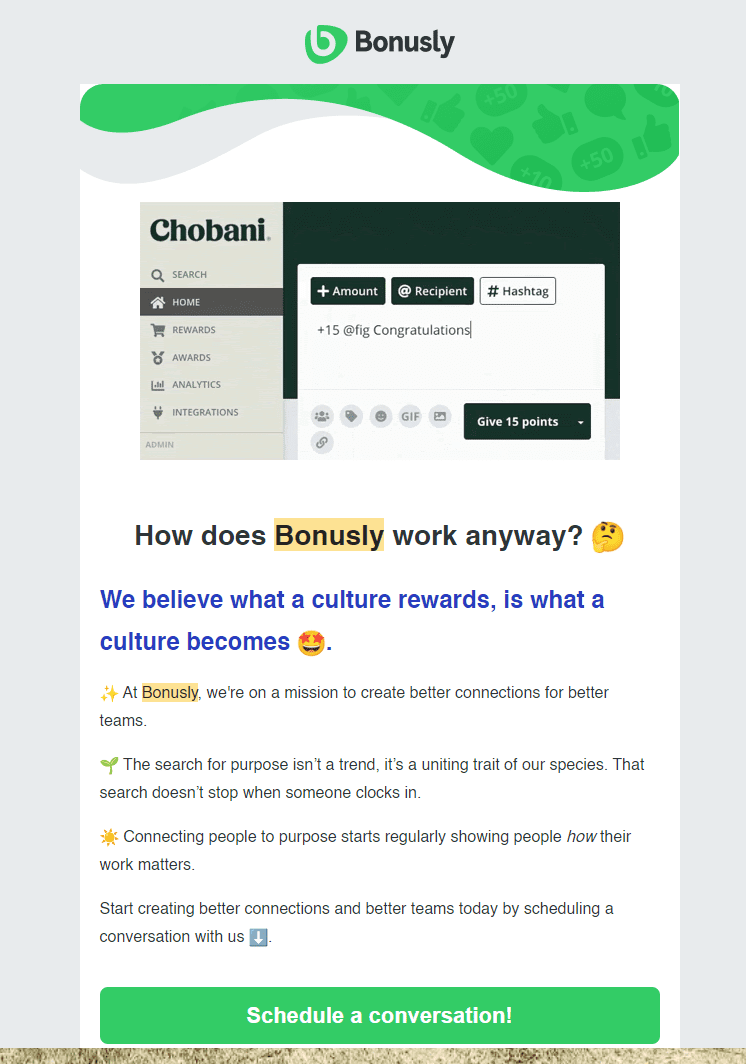
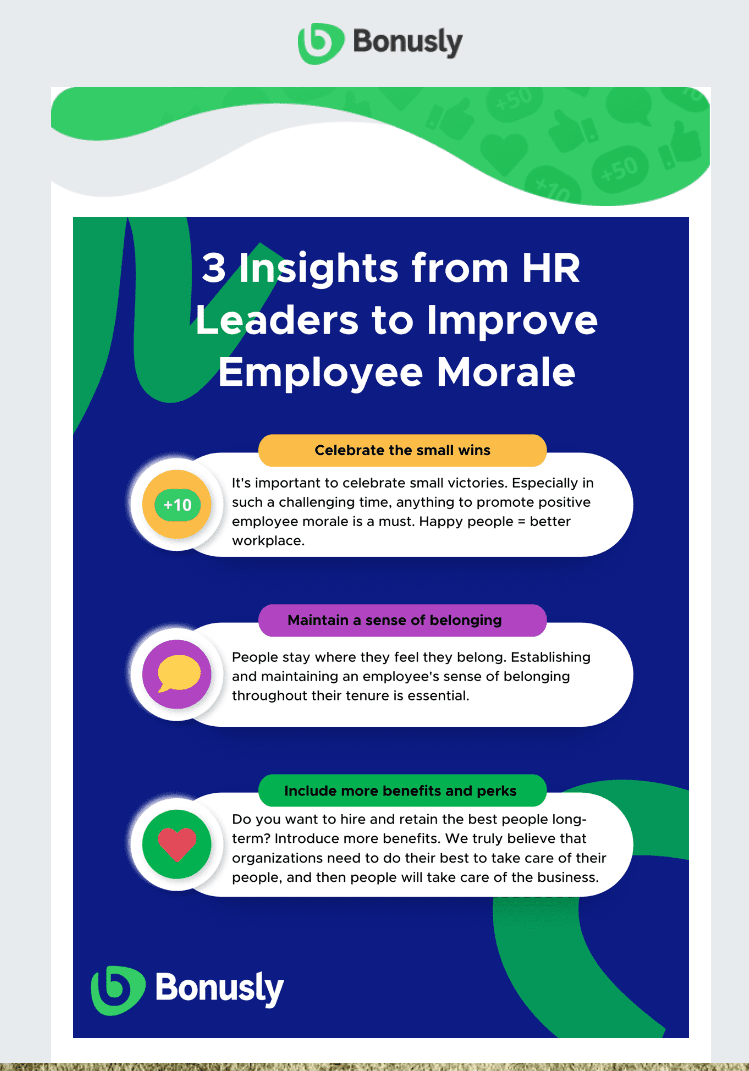
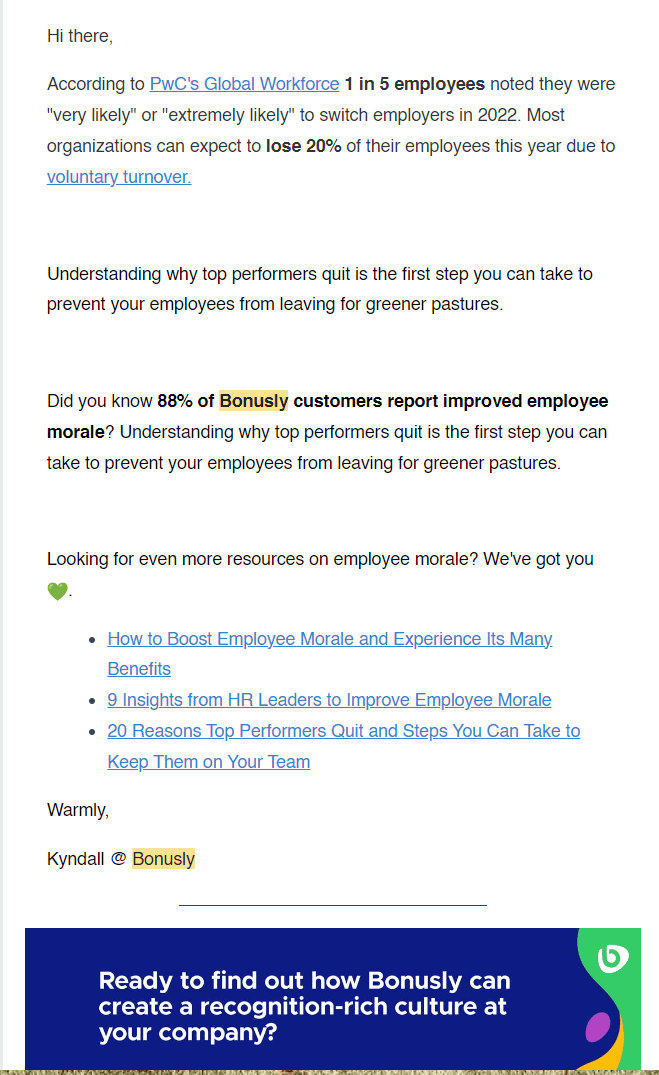
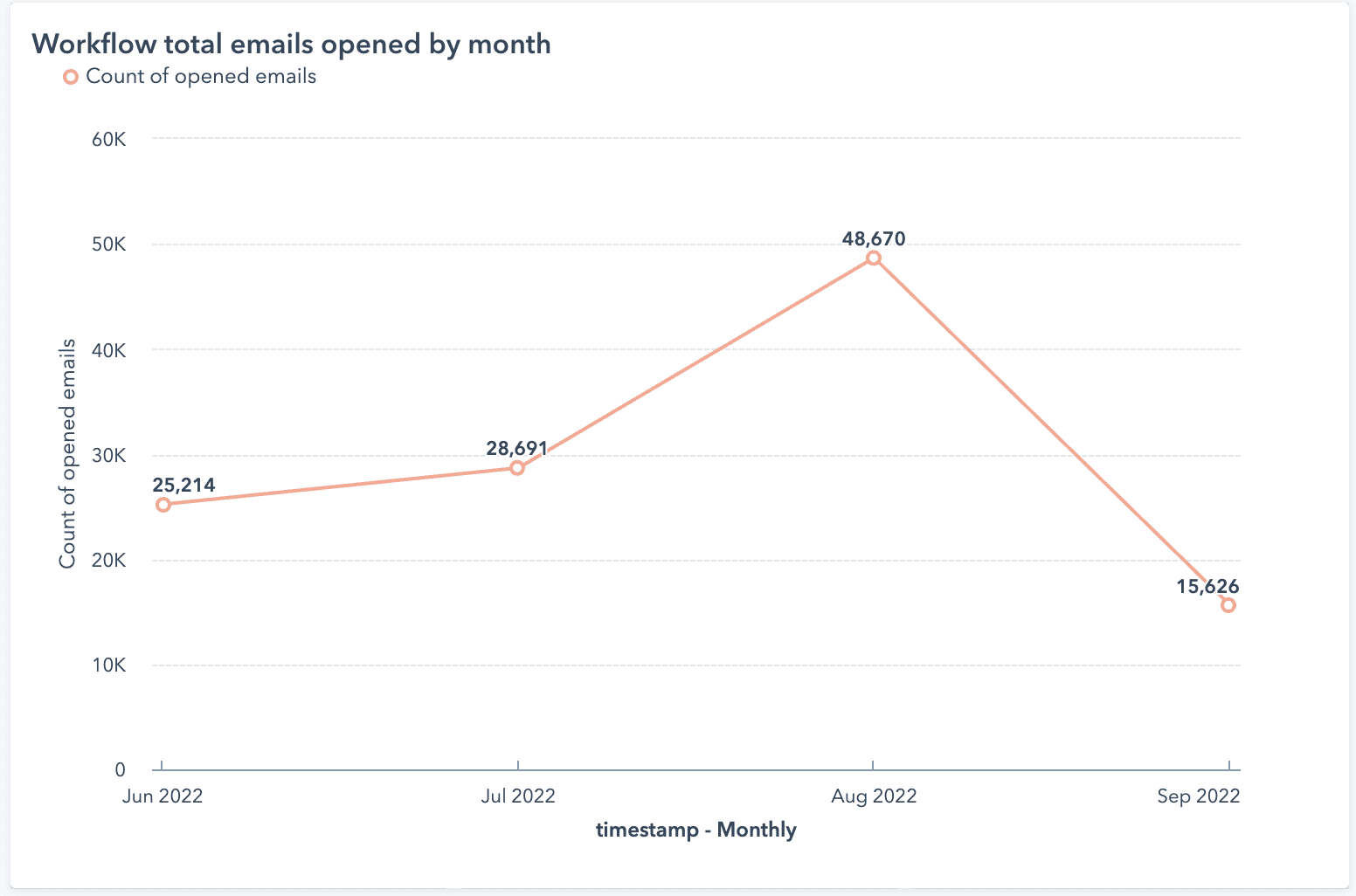
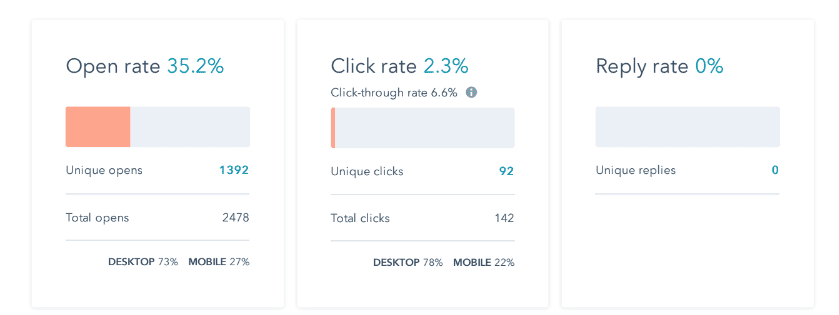
Bonusly’s nurture campaigns weren’t working. Open rates were low, engagement was worse, and the content wasn’t doing the product any favors. I was the most experienced email marketer on the Paid, Content, and Product teams, so I took the lead on fixing it.
I rebuilt the campaigns inside HubSpot—rewriting flows, tightening segmentation, and making sure every message had a reason to be there. From past experience, I knew that data speaks louder the higher up the org chart you go, so I leaned into that: new graphics, clearer messaging, and CTAs that gave execs something to actually act on.
It wasn’t just about better emails—it was about re-earning attention we’d already lost. And we did. Open rates jumped. Engagement came back. The campaigns stopped being noise.
Bonusly’s ad performance was weak. Reporting was unreliable, and results had been outsourced to an agency that never delivered. I took full control of campaign strategy and execution across all platforms, and started rebuilding from the inside.
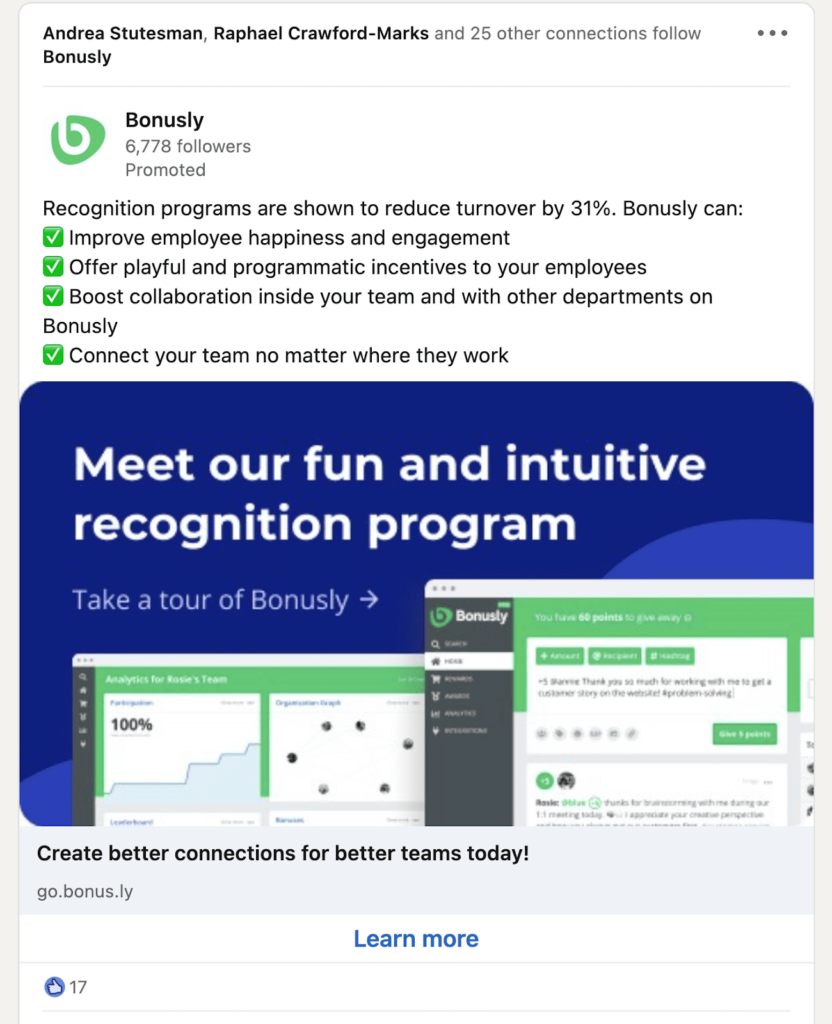
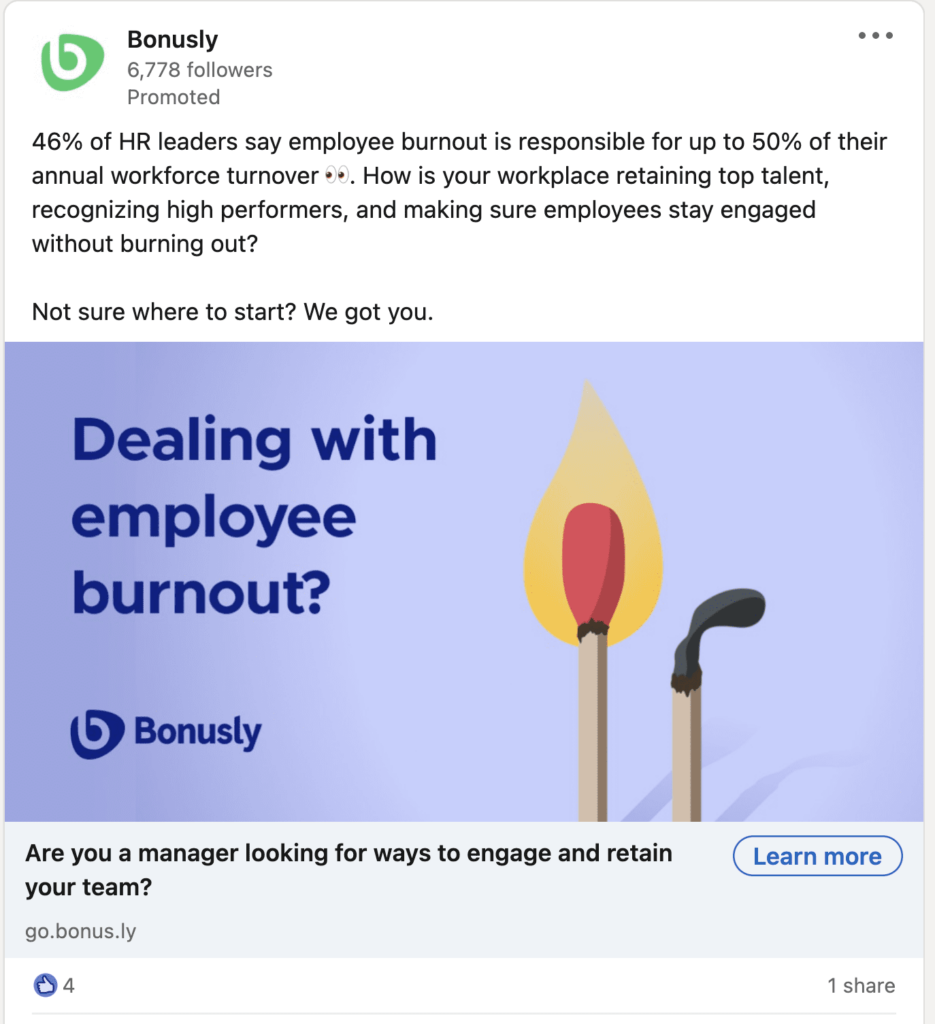
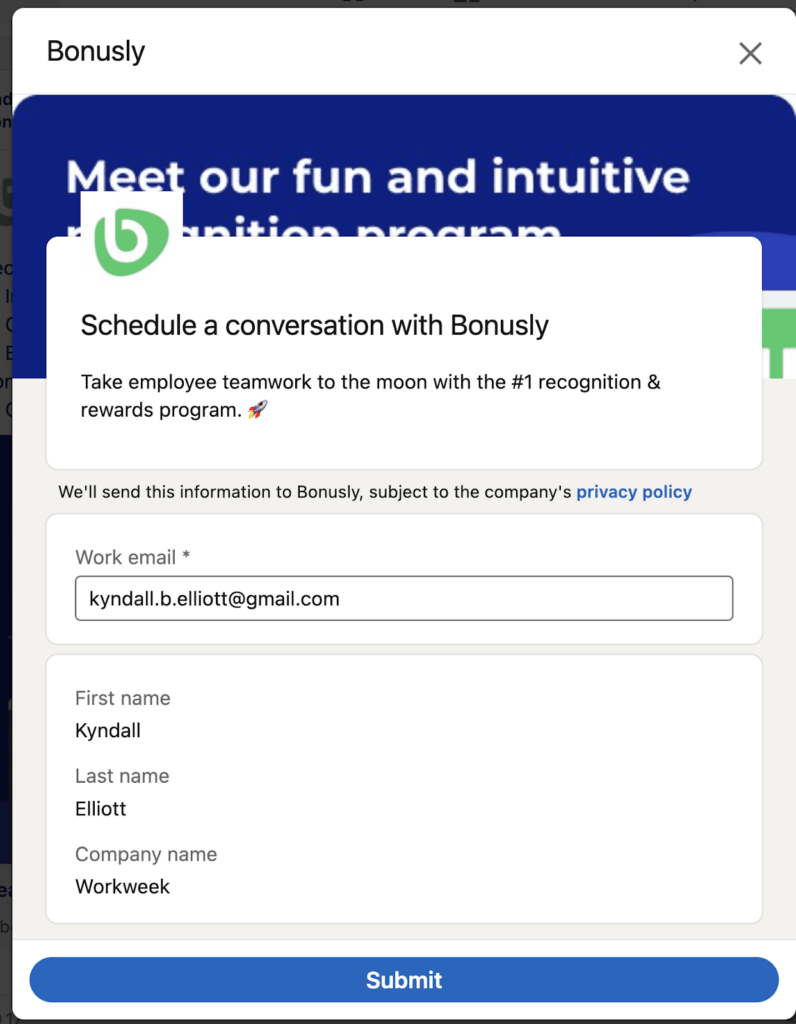
LinkedIn was a major focus—HR lived there, but performance hadn’t matched the audience. I worked directly with Sales to identify high-priority accounts and launched an account-based campaign tailored to decision-makers.
The shift paid off. We brought in qualified leads from VPs, Directors, and Heads of HR, including enterprise contacts from several FAANG companies. It was the strongest response the team had seen from LinkedIn—and a clear signal the strategy was working.
During my time at Bonusly, Quiet Quitting was sweeping the nation, and I pitched the idea to the content team towrite a blog post about it. This post gained thousands of clicks and I was approached by several companies to create similar content.
In my efforts to continually optimize ad campaigns as well as nurture campaigns. I also created several new landing pages to increase CRO.