Executive partnership
Reported to the CEO and set the marketing agenda with him. Quarterly OKRs, a Friday pipeline dashboard he reads without asking me for it, and the first full marketing plan the company had, inside 90 days.
// Case study
STRATEGY + DEMAND GEN + AI OPERATIONS
Marketing now sources 86% of sales pipeline. Here is the plan that did it.
// Context
Workzone had what most SaaS companies would trade for: a product customers keep for seven years on average and a client list going back to 2003. What it did not have was a way to find the next customer. Marketing sourced 41% of new deals. The company bought demos from pay-per-lead vendors to cover the gap. Sales ran on outbound and whoever walked past the booth. Nobody had written down what marketing was for, so nobody could say whether it was working.
I reported to the CEO with one brief: pipeline. Inside 90 days the company had its first full marketing plan, built on tracking I rebuilt so the plan would be true.
Twelve months later: marketing sources 86% of sales pipeline. Sales-qualified demos doubled year over year. Channels that did not exist when I started, paid search, the free trial and AI search, produce 28% of demos. The pay-per-lead vendors are gone. Workzone holds the best average position in AI answers of sixteen brands. Everything on this page is how.
// The work
Reported to the CEO and set the marketing agenda with him. Quarterly OKRs, a Friday pipeline dashboard he reads without asking me for it, and the first full marketing plan the company had, inside 90 days.
Pitched and won a full rebrand of the site and app in July 2026, then ran the agency that built it and wrote the brand system everyone works from.
Agencies, contractors, and day-to-day work with sales, customer success and product. Co-launched the free trial with product; it became the largest single source of marketing demos.
Rebuilt from 85 recorded sales calls and a year of win/loss data. The share of demos that move into active evaluation went from 41% to 58%.
Paid search, organic, the free trial, email and events, run as one plan. Ended the pay-per-lead vendors. New channels went from 3% to 28% of demos, and marketing's share of pipeline from 41% to 86%.
Found that 78% of traffic was bots and demos were overcounted 5x, rebuilt tracking, and republished the numbers leadership plans against.
Brought Claude, MCP and Lovable to Workzone and onboarded the teams. The CEO builds his own customer-facing tools, customer success automated QBR follow-ups, and a 65-tool MCP shortlist I ran became the company's AI roadmap.
Twelve AI-built internal tools replaced software purchases and never touched the engineering queue. Claude agents pull five sources every Friday and publish the pipeline dashboard on their own.
Built AI answer tracking from scratch. Workzone holds the best average position of sixteen project management brands, and sales-qualified demos from AI search grew 6x in a year. I wrote the most-cited page.
// Process
Ninety days in, the company had its first full marketing plan: the channels we would build, the ones we would stop paying for, the numbers we would report and how often. The CEO's note in the company channel three months after I started said it plainly: for the first time, a solid marketing plan in place. The plan is why the rest of this page holds together instead of reading as a list of tactics.
Nothing was tracked properly and some of it was not tracked at all. I set up SE Ranking in my first weeks and AI answer tracking in January, and rebuilt what existed. In GA4 I segmented by city and page, built a bot filter in GTM, and restated everything publicly. 78% of sessions in the audited period were bots. Demo events were overcounted roughly five times, 367 against a true 71. Leadership has planned against clean numbers ever since, and the Friday dashboard that reports them publishes itself. I would rather report a number I trust than a bigger one I cannot defend.
I analyzed 85 recorded sales calls and a year of win/loss data before changing a word of positioning. Buyers never asked about industry fit, and sales was focused on the wrong competitor. The messaging that came out of that work attracted the buyers Workzone wins: the share of demos moving into active evaluation went from 41% to 58%, and win rate on closed deals rose from 14% to 19%.
Channels that did not exist a year earlier went from 3% to 28% of sales-qualified demos. Paid search grew 6x, from 3 deals a year to 17. The free trial, co-launched with product, sourced 22 deals and became the largest single marketing demo source. AI search went from zero deals to six. I ended the pay-per-lead vendors on purpose, 26 bought demos the year before and zero since, because buying demos hides whether your marketing works. Marketing's share of sales pipeline reached 86%, and sales-qualified demos doubled year over year: 25 in Q3 2025, 53 in Q3 2026.
Events had been a booth, a notebook and a pen. I replaced that with experiences people sought out: a rainbow-hat scavenger hunt with a live tracker app I built, swag people kept, grand prizes, and the new brand on the booth. Two fall shows produced 10 sales-qualified demos in three weeks, including four from a credit union conference we worked with no booth at all. Events were the #1 source of sales-qualified demos in October, at 36%, and October was the best event month in over a year.
I brought Claude Cowork, MCP and Lovable to Workzone and onboarded the teams. The CEO now builds his own customer-facing tools. Customer Success automated QBR follow-ups. The company's AI integration roadmap came out of a 65-tool shortlist I ran in a week. Twelve AI-built internal tools, from dashboards to approval workflows to the event app, replaced software purchases and never touched the engineering queue. Claude agents pull five sources every Friday and publish the pipeline dashboard without me. I treat AI like a team I manage: clear jobs, checks, and a review.
Search is moving from ten blue links to AI answers, and I planned for where buyers are going rather than where they were. Organic conversion went from 0.26% to 0.72%, nearly triple, and organic form submissions rose 71%. I mapped 2,549 split queries across 54 duplicate URLs, won CEO sign-off on 18 consolidation decisions through an approvals app I built, and shipped every redirect myself. Within a month, competing queries in those clusters fell 46% and 7 of 10 keeper pages climbed. Monthly organic traffic value doubled, priority keywords in the top 10 went from 8% to 19%, and the first site audit's 245 errors are now 12. In AI answers, Workzone holds the best average position of 16 tracked brands, ahead of Asana, Monday and Smartsheet, and I wrote the most-cited page myself.
// Builds
Eight Lovable apps are live for Workzone. These are the three that changed how the company works.
Brand
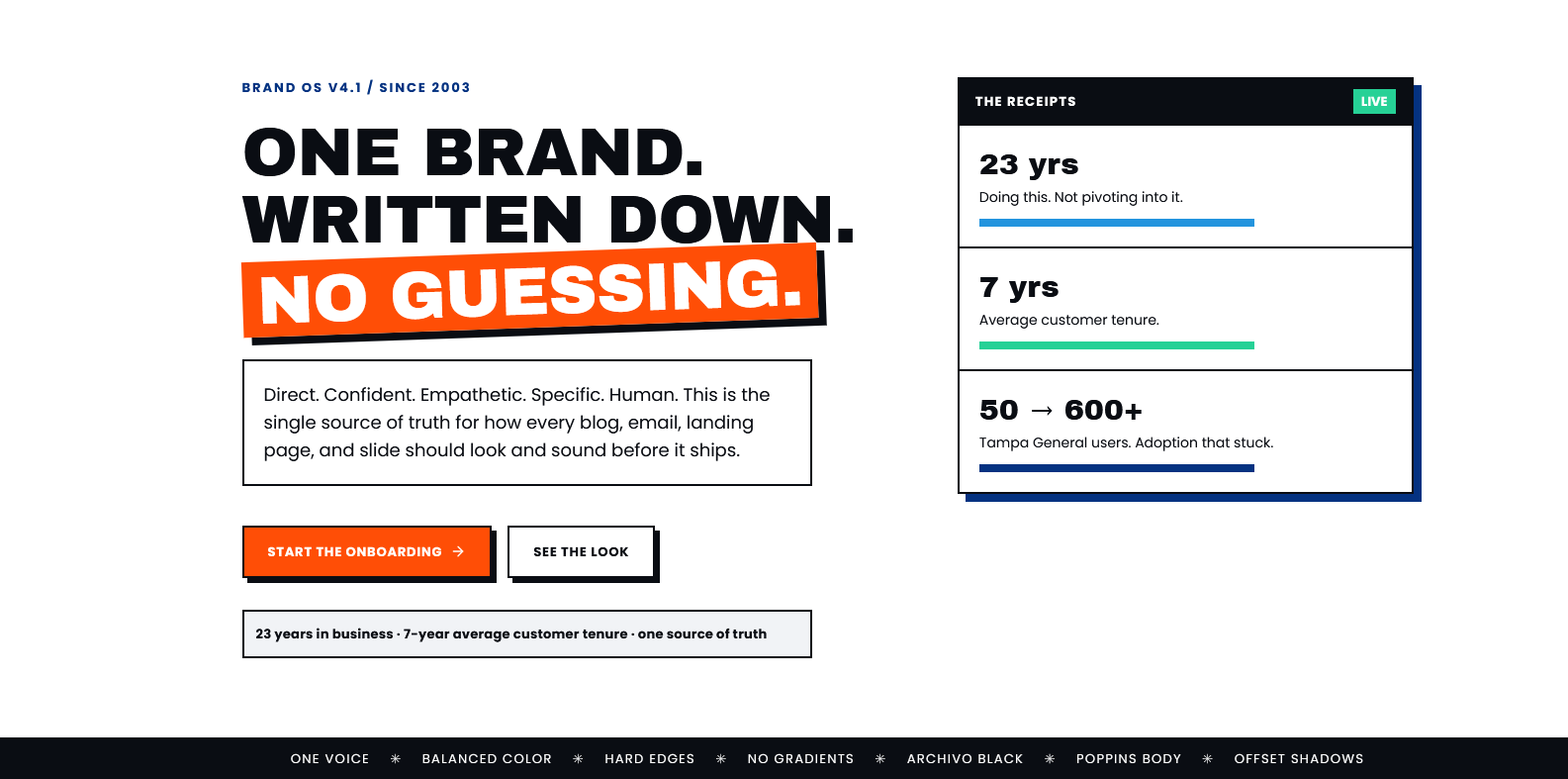
The whole brand written down and made usable: voice, messaging pillars, visual identity, an AI search section and a pre-flight checklist anyone can run before something ships. I pitched the rebrand to leadership, won it in July 2026, and built this so the agency, freelancers and the team had one source of truth.
Leadership greenlit the full rebrand of site and app. The design system this portfolio runs on came out of it.
Open the app → (opens in a new tab)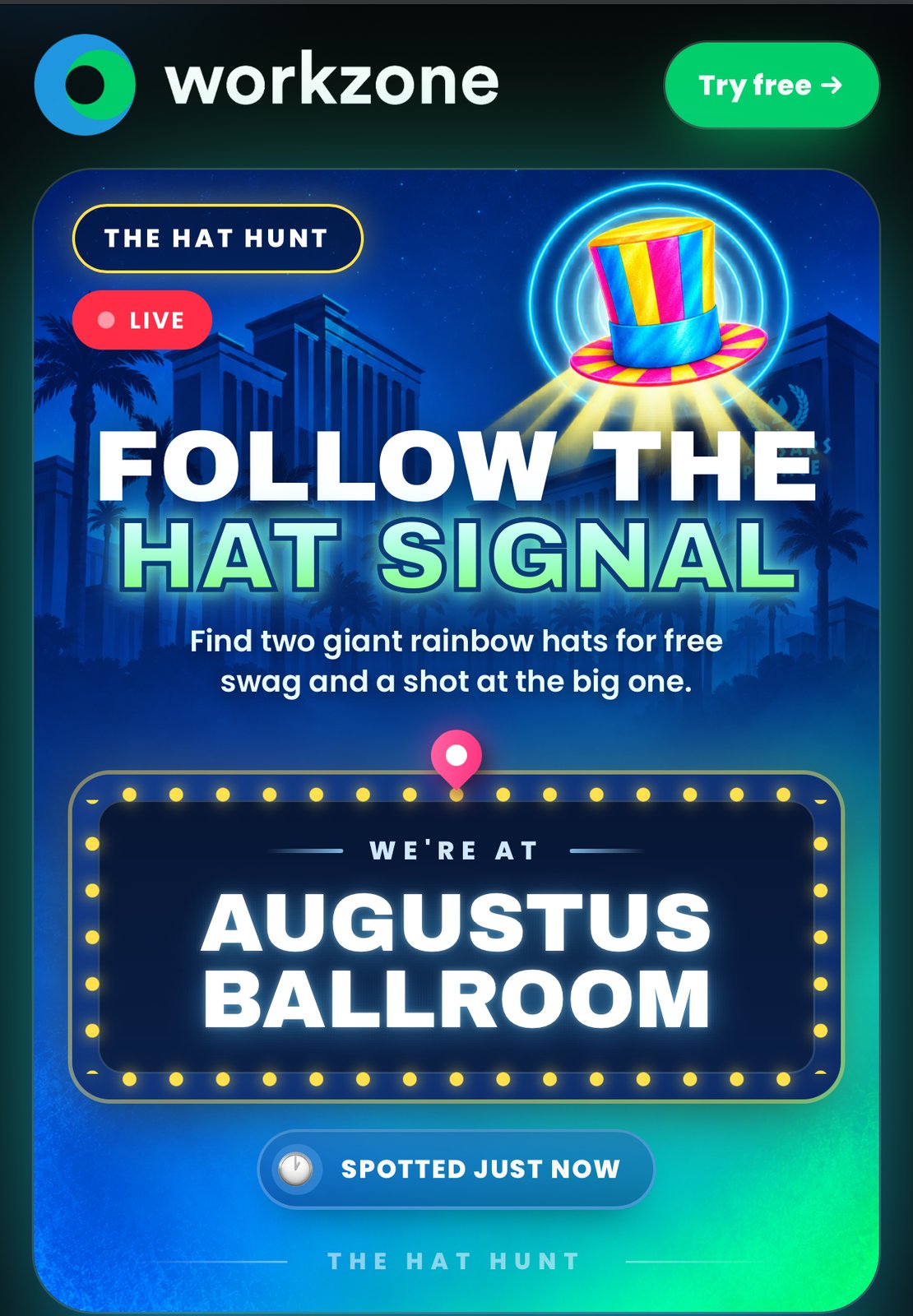
Events
A live tracker for a credit union conference we worked with no booth. Two giant rainbow hats, QR flyers, and a page that told attendees where we were standing, updated from a private admin screen in one tap.
Four sales-qualified demos from a show with no booth, and the format that made events the #1 demo source in October.
Open the app → (opens in a new tab)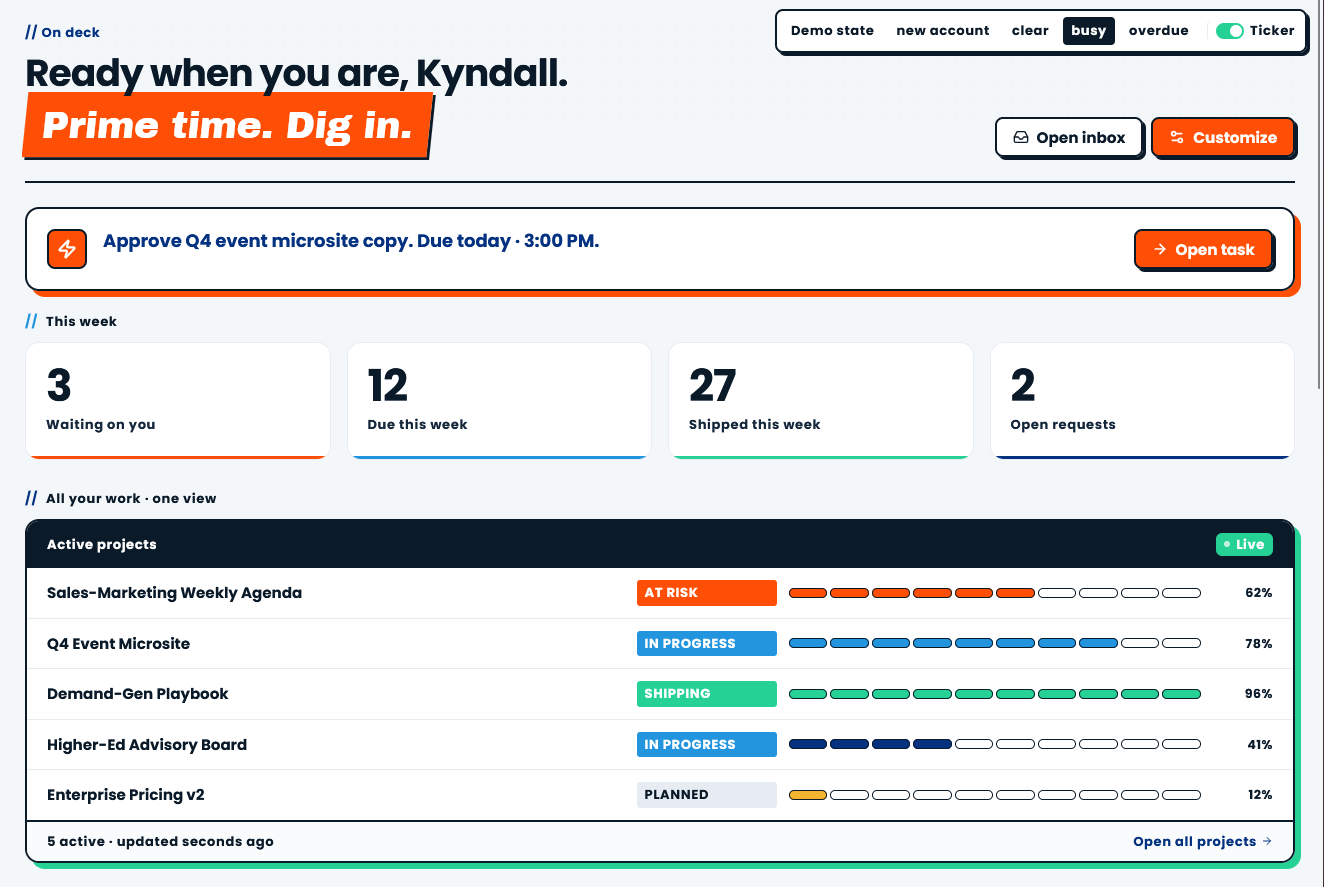
Product
A working rebuild of the Workzone in-app dashboard, designed from what customers said in reviews and sales calls rather than from internal opinion. New-account onboarding, a setup tracker, saved views and a first-project flow, built as a clickable app so leadership could use it instead of imagining it.
Pitched to the CEO and CTO as the way to make the self-serve bet pay off. Direction approved; the CTO now owns feasibility.
Open the app → (opens in a new tab)// Looking back
Start AI search tracking on day one. I set it up in January, and within eight months Workzone held the best average position of 16 brands. Had the tracking existed from my first week, the content plan would have been aimed at AI answers a full quarter earlier, and the page that became our most-cited would have shipped in the fall instead of February.
Run the new event model from the first show. The hat hunt, the live tracker app and the no-booth conference play turned events into the top demo source in October. The format works anywhere there is a crowd and a reason to talk. I would take it to every show on the calendar from the start, not just the fall ones.
Publish the dashboard from month one. Once the CEO had a Friday pipeline view that updated itself, every conversation got faster and every decision got easier to make. The three months before it existed were the three months I spent answering the same questions in Slack. The dashboard is now the first thing I build anywhere.
// What leadership said
Joined 3 months ago and is straightening our messy and historically underinvested Marketing engine every passing week. For the first time we have a solid Marketing plan in place.
Strategic thinking, attention to detail and execution timelines were incredible.
The planning she did for it was amazing and her execution knocked it out of the park.
// Outcomes
Pipeline, AI search, events and email, pulled from HubSpot, Peec AI, Clarity and Search Console.
// The stack
// Proof
// Live dashboard
AI engines cite workzone.com more than any other site for the buyer questions we track. Marketing sources 86% of pipeline. See every number and where it came from.
Open the dashboard// Keep going